Greater transparency in rail freight: real-time tracking and accurate ETAs.
Rail-Flow's ESA-funded RaiSu project has reached a milestone in combining GNSS, RNE TIS, and telematics data to deliver real-time shipment tracking and significantly more accurate ETAs, replacing rail freight's traditional lack of transparency.
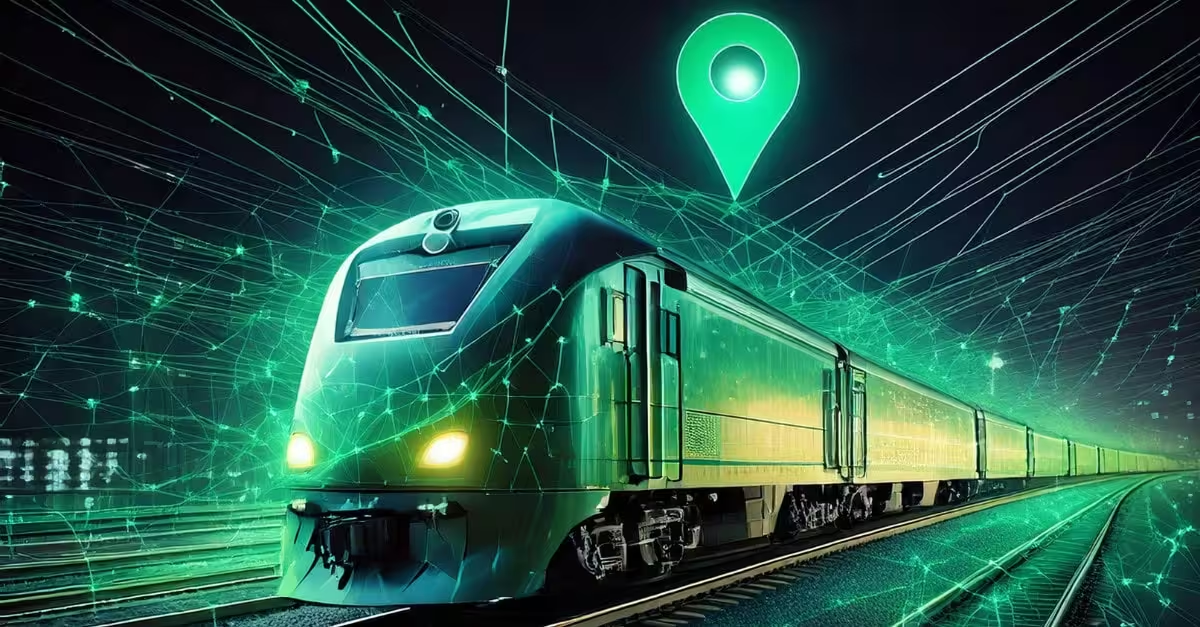
Rail freight is finally stepping into the modern era. With real-time shipment tracking and accurate ETA calculations, transport is becoming more visible and predictable.
In road transport, real-time data and precise arrival forecasts have long been the norm. Freight forwarders, shippers, and end customers benefit from accurate Estimated Time of Arrivals (ETAs), transparent shipment tracking, and optimized logistics management. However, rail freight has traditionally lagged behind. Delays, standstills, or arrival times often remain unclear, making the transport process feel like a “black box.”
Thanks to the European Space Agency-funded RaiSu project (Rail Freight Ride Surveillance), this lack of transparency will soon be a thing of the past.
First milestone achieved: greater visibility and predictability in rail freight.
By integrating multiple data sources, RaiSu is creating a new level of transparency. GNSS signals enable precise real-time tracking of wagons and trains. Another key component of the project is the connection to RNE’s Train Information System (TIS), a web-based platform that provides real-time international train data directly from infrastructure managers’ systems. These insights enhance tracking accuracy and improve transport movement forecasts. When combined with telematics data from kasasi, this integration provides a comprehensive and verified picture of current train movements.
All this data is seamlessly integrated into our Rail Transport Management System (RTMS), providing a complete, validated view of the entire transport process. With the successful integration of kasasi data and RNE TIS, we have now reached a major milestone. This connection allows us to enrich and combine data from multiple sources to calculate ETAs with greater precision. As a result, we create real added value for rail freight by enhancing transparency and enabling more reliable planning.
New transparency for a more efficient supply chain.
This new level of visibility brings significant benefits to various stakeholders in rail logistics. Shippers benefit from reliable ETAs, allowing for more precise planning and improved coordination with customers. Real-time updates help optimize supply chain management and enable proactive responses to potential delays. This results in smoother communication across the entire transport chain and significantly increased transparency.
For rail freight operators, improved predictability leads to greater efficiency in resource allocation. Terminals and ports benefit from more stable arrival times, streamlining their operational processes. Additionally, the increased reliability of rail transport makes it a more attractive mode of transportation, actively supporting the modal shift from road to rail. Ultimately, greater planning accuracy contributes to making rail freight more cost-effective and competitive.
The next step: how RaiSu is shaping the future of rail freight.
In Germany alone, over 5,000 freight trains operate daily, managed by more than 200 rail freight operators. Every stakeholder benefits from improved planning accuracy and long-term customer satisfaction. The widespread implementation of RaiSu data will make rail freight more transparent, efficient, and competitive.
The next phase of the project focuses on further optimizing data processing. By overlaying multiple data sources, we create new synergies that enable even more precise ETA calculations. Additionally, we are launching a pilot phase with reference customers to test the solution under real-world conditions and refine it continuously.
With real-time tracking and precise ETAs, rail freight is moving away from the black box of uncertainty toward a fully connected, transparent, and efficient mode of transport.