Step 1

Booking & Capacity Planning
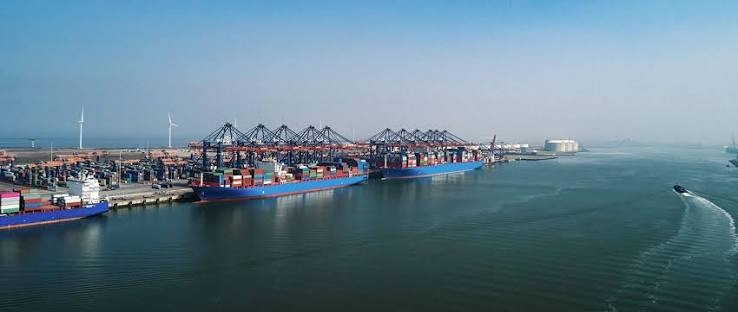
Receive customer bookings via portal, EDI, or Excel. Plan the train programme against your rail traction and terminal-slot capacity — all capacity and assets in one view.

Rail-Flow for intermodal operators
Utilise your assets and steer every train and terminal from one platform.
As an intermodal operator, your wagons must earn and your partners must perform. Rail-Flow maximises wagon utilisation, measures railway undertaking performance train by train, and makes terminal operations efficient and transparent — in one platform.


THE STATUS QUO
Intermodal operations shouldn't run on phone calls, Excel, and email.
Every day your team coordinates rail traction, wagon allocation, and terminal slots across disconnected partner systems. Here's what that costs — and how Rail-Flow changes it.

You are the manual link between partners
Railway undertakings, terminals, and wagon keepers each run their own systems, and their responses to requests are often too late and too cumbersome. Every status update is a phone call you make, and every detail is re-keyed into your own tools.

No live train or wagon visibility
Customers ask where a unit is. You call the terminal, check the wagon list, and wait for the railway undertaking's ETA, or check the location of the wagon manually and make a guess. Hours go on the phone, and the answer is stale before you pass it on.

Manual train and wagon planning
Loading lists, train composition, and wagon allocation live in spreadsheets. One missed email is one missed departure, and every constraint — weight, length, dangerous goods — is checked by hand.

Terminal slots juggled by email
Slot bookings and transhipment details sit in inboxes and phone calls with each terminal. A missed slot cascades into a missed connection, and nothing ties it back to the train.

Slow invoicing reconciliation
Reconciling planned vs. executed across traction, terminal, bookings and wagons takes weeks. Disputes drag on and cash flow suffers.

No data for performance KPIs
Asset utilisation, on-time performance, and route profitability are scattered across exports and Excel files.

One operator cockpit for the whole train
Coordinate all operations (traction, wagon management and utilisation, and terminal handling) from a single cockpit: one source of truth for every order.

Real-time visibility across every leg
Live status across trains and wagons, right down to unit level. Add full transparency of terminal activity and you get the most reliable ETAs on one platform — easy to track and shared with your customers via portal or API.

Fully autonomous planning
Build the train and allocate wagons and units with weight, length, DG, and many more constraints applied, then reserve terminal slots in the platform. Booking instructions go to terminals, unit-loading updates come back from the terminal, and the train composition goes to your railway undertaking — all automatically.

Terminal slots & transhipment integrated
Book terminal slots and manage transhipment down to wagon-by-wagon load planning in the same platform as your traction and wagons. The terminal piece other tools leave out.

Instant reconciliation
Planned vs. executed matched automatically across every leg. Invoice in days, not weeks, and resolve disputes with a full audit trail.

Operational analytics built in
Utilisation, punctuality, and profitability dashboards from day one — no separate reporting project required.
THE STATUS QUO
Problems
If your team spends more time chasing trains, wagons, and slots than running them, you'll recognise these three.

Coordination by phone and inbox
You sit between the railway undertaking that hauls the train, the terminals that handle it, and the keepers whose wagons you run, and none of their systems talk. Keeping trains, wagons, and slots aligned means calls, emails, and re-keying, and one missed message can miss a departure.
Train status by phone call
A customer asks for an ETA. You don't have one, so you call the terminal, check the wagon list, and wait for the railway undertaking. By the time you answer, the situation has changed and trust has slipped.
Reconciliation in Excel
Planned vs. executed across traction, terminal, and wagons lives in spreadsheets. Cross-leg reconciliation takes weeks, disputes drag, and your margin leaks in the gaps between systems.
WHAT CHANGES WITH RAIL-FLOW
Solutions
Three things every intermodal operator gets when they switch to Rail-Flow.

Plan trains, allocate and monitor your wagons, and book terminal slots from one cockpit. Details entered once flow everywhere: instructions to terminals, train composition to your railway undertaking, loading updates back.

Live status across trains and wagons, down to unit level. Full terminal transparency gives you the most reliable ETAs — tracked in one view and shared with customers via portal or API.

Bring railway undertaking, terminal, and wagon-keeper updates into one operator view. The parties don't integrate with each other; you hold the single picture and measure partner performance. Deviations are handled by your rules, and only what needs a decision surfaces. When traction or wagon capacity falls short, pull it from the Marketplace.
HOW IT WORKS
From booking to billing in one connected flow.
Rail-Flow guides every intermodal order through five connected stages, so your team, your partners, and your customers always work from the same picture, and every change is captured, not lost.
Booking & Capacity Planning
Receive customer bookings via portal, EDI, or Excel. Plan the train programme against your rail traction and terminal-slot capacity — all capacity and assets in one view.

Train & Wagon Planning
Build the train composition, allocate wagons with weight and dangerous-goods constraints applied, and reserve terminal slots. Booking instructions go to terminals and the wagon list to your railway undertaking automatically.

Execution & Visibility
Terminals return gate-in/gate-out and wagon-composition updates; the railway undertaking returns train ETAs, all processed automatically. Detect deviations early, replan by your rules and available capacity, and share live ETAs with customers.

Deviation Handling & POD
Resolve exceptions automatically by your rules and capacity; only what needs a decision surfaces on the dashboard and planboard. Capture proof of delivery on any road first/last mile and close transports with a full audit trail.

Auto-match planned vs. actual across traction, terminal, and wagons, issue accurate invoices fast, and report on the KPIs that matter: utilisation, punctuality, and profitability.
Products
Your wagons should be earning, not waiting.
Capacity that departs empty is the most expensive thing you own. Transport Management moves it, the Terminal Operating System turns it round, Offer Management & CRM prices it. Start with one.
TRANSPORT MANAGEMENT
Plan down to the platform. Sell the whole train.
A road TMS has no platform, so it has nothing to check. Transport Management runs over 100 rail plan checks. You pick the hard blocks. A wagon inside its weight limit still blocks if one platform is overloaded. Dangerous goods stay two platforms apart, fifteen when cyanide meets acid. Nobody retrofits that.
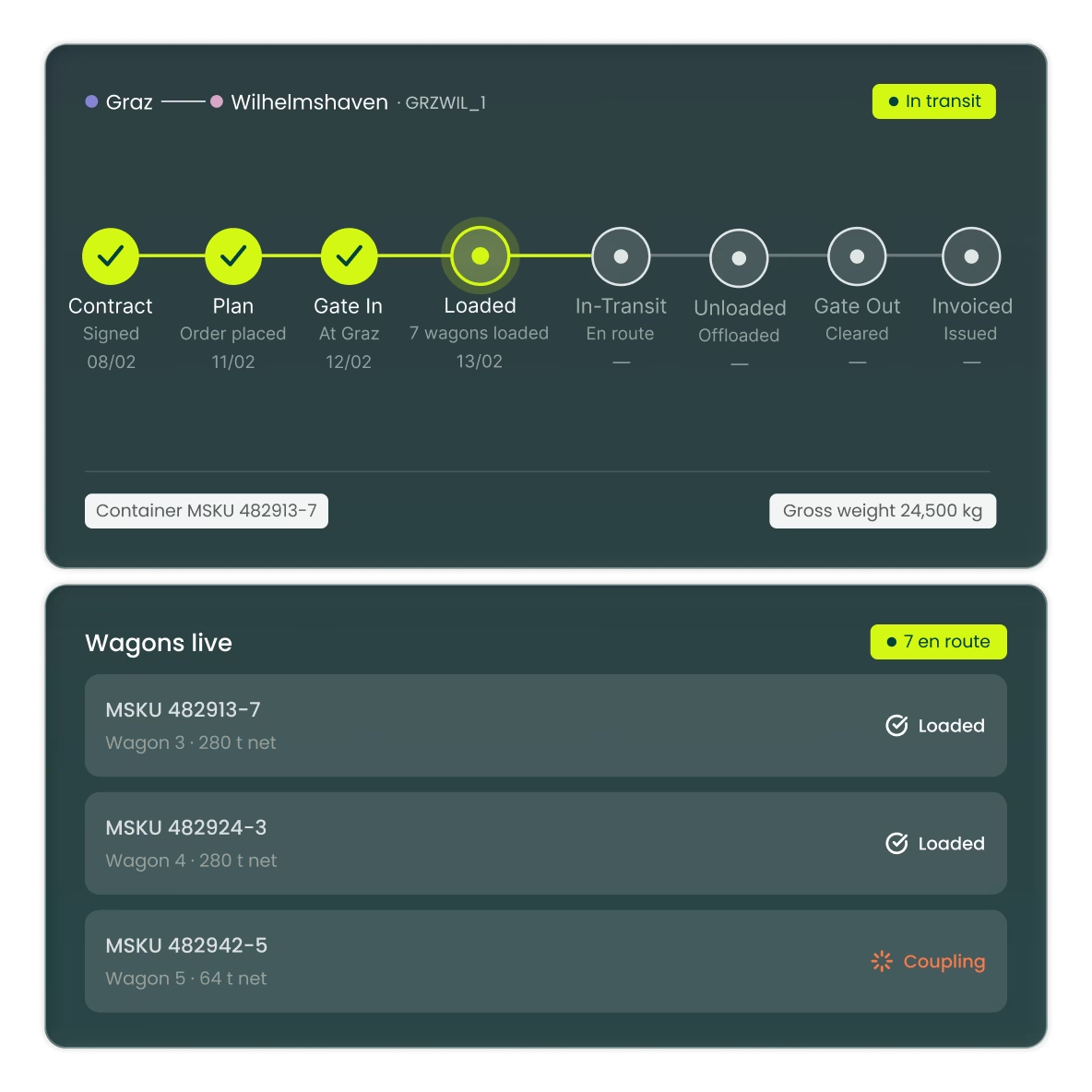
TERMINAL OPERATING SYSTEM
The terminal piece other tools leave out.
Gate, yard and wagon loader, on the same database as your traction. A truck turns up unbooked? The gate makes the slot and carries on. Damage is a pin on a six-sided diagram, photographed and priced. Loading ends, the CIM goes out. Parking and storage bill off the gate clock, minus that terminal's own holidays.
OFFER MANAGEMENT & CRM
See the margin before the customer sees the price.
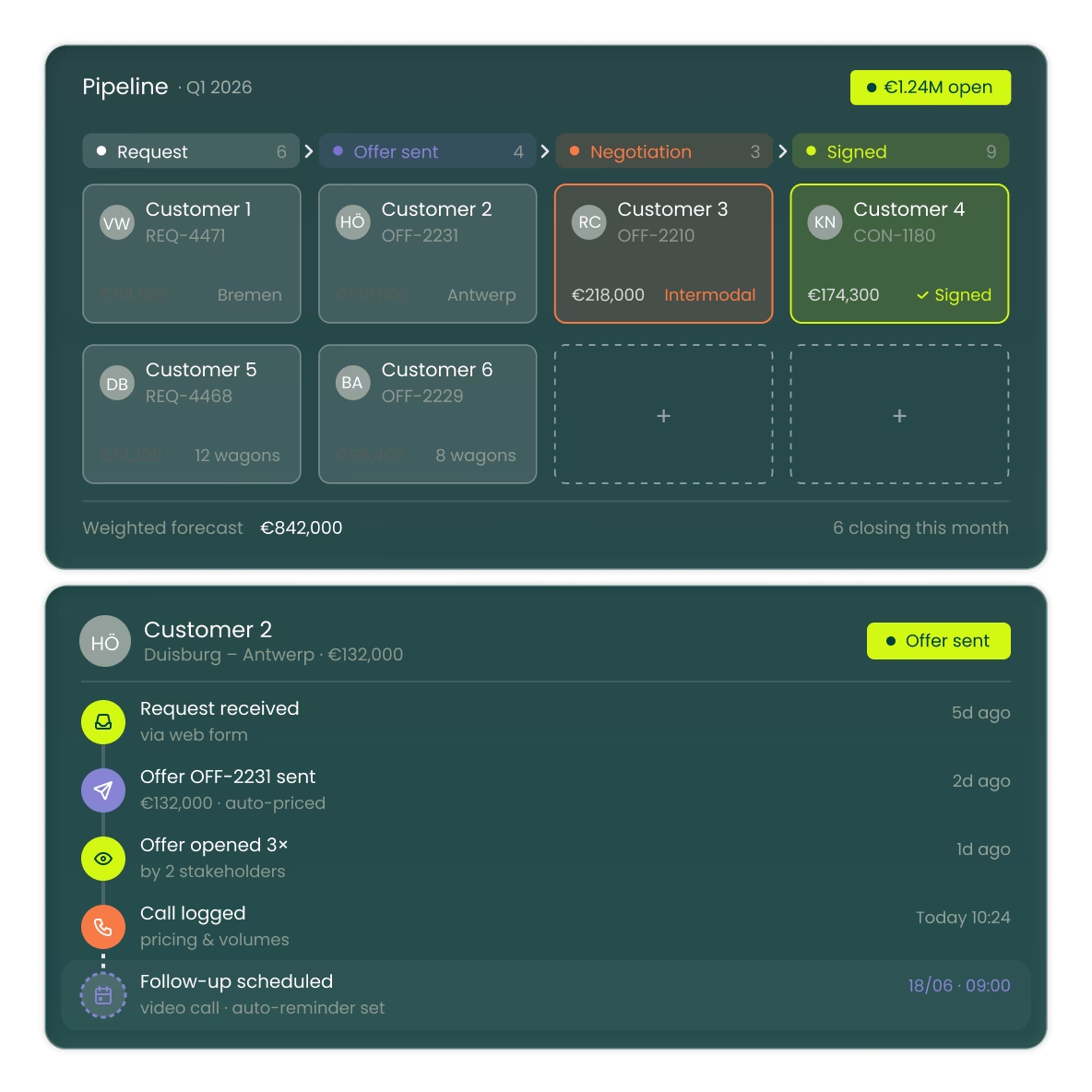
Quote from the same rate library the invoice will use, priced per leg across traction, terminal and road. The offer screen carries the margin on this quote and your win rate with this customer, side by side. Accept it and it becomes a booking. Nobody re-keys the price.

Ready to see it in action?
Book a 30-minute demo with our intermodal specialists. We'll walk through your specific train, wagon, and terminal workflow and answer your questions. No slides, no pitch.
Customer Stories
Real intermodal operations, real results.
Railway Operator
Captrain runs six legal entities across European rail freight markets. Before Rail-Flow: each entity managed sales separately, scattered information, inconsistent offer templates, through put times that stretched across weeks, and management with no view of the pipeline across the group. With Rail-Flow Offer Management and CRM: one sales architecture, six brands, one shared customer database underneath. Pipeline visibility from inquiry to award across every entity, and standardised offer documents that reflect the right brand, the right contract terms, every time.


Features for Intermodal Operators
The features intermodal operators ask about most often: all included, all production-ready.

Features for Intermodal Operators
Built-in capabilities that matter for intermodal.
The capabilities intermodal operators ask about most — all included, all production-ready. Every function a modern operator needs to run trains, wagons, and terminals, in one platform.

Live tracking & proactive deviation alerts
Track every train, wagon, and terminal move in real time and catch delays before your customers do. Railway undertaking ETAs and terminal gate events arrive in one feed, with automatic event detection, live ETAs, and deviation alerts that auto-replan by your rules and capacity, so your team acts early and keeps customers updated without a single phone call.

Terminal slot & transhipment management
Book terminal slots and manage transhipment, down to wagon-by-wagon load planning, in the same platform as your traction and wagons, not in a separate inbox. The terminal piece that road TMS and collaboration-style tools leave out.
Rail-Flow Marketplace
Source missing traction and wagon capacity in minutes.
When your rail traction or wagon capacity falls short, the Marketplace gives you direct access to vetted rail carriers and keepers across Europe. Post requests, compare quotes, and book, without days on the phone. List your own spare traction or idle wagons and turn them into revenue.
What are the questions intermodal operators ask the most?
Have a question that's not covered here? Reach out and we'll get back to you within one business day.
The standard solution with our existing interfaces typically goes live in 6–10 weeks. Additional modules (TOS, IOM, Marketplace), enhancements, custom integrations, or broader rollout are then delivered in parallel, sequenced around your priorities.
Yes. Rail-Flow integrates with your existing TOS via API, EDI, or file exchange, so you can run our TMS alongside the terminal system you already have.
Your partners connect toRail-Flow, not to each other. We already have live integrations with around 100+RUs, terminals, and wagon keepers, so a new partner is usually already connected. If not, onboarding is quick via standard EDI, our module that reads and writes virtually any data format, or a supplier portal the partner uses directly. You send wagon lists and booking instructions from one system andhold a single picture. New connections take days, not months.
Yes — full CIM/CUV support is built in, including dangerous-goods handling, RID separation on the wagon plan, audit-ready compliance trails, and automated way bill generation.
Absolutely. Most operators start with the operational handling of the process in the Intermodal TMS, where the pain is sharpest, then expand to the customer portal and commercial module. From there, many continue with the TOS, IOM, and further integrations once value is proven.
Intermodal doesn't stop, and neither do we. You get a dedicated support line and 99.8% platform uptime, so the system is there when your trains, wagons, and terminals are moving, day or night.
Blog
Read more customer success stories and updates from intermodal operators.

.avif)