Rail Capacity Broker: New platform makes it easier to move small consignment sizes by rail
A neutral, jointly developed platform turns spare capacity on existing services into transparent, bookable transport options for shippers.
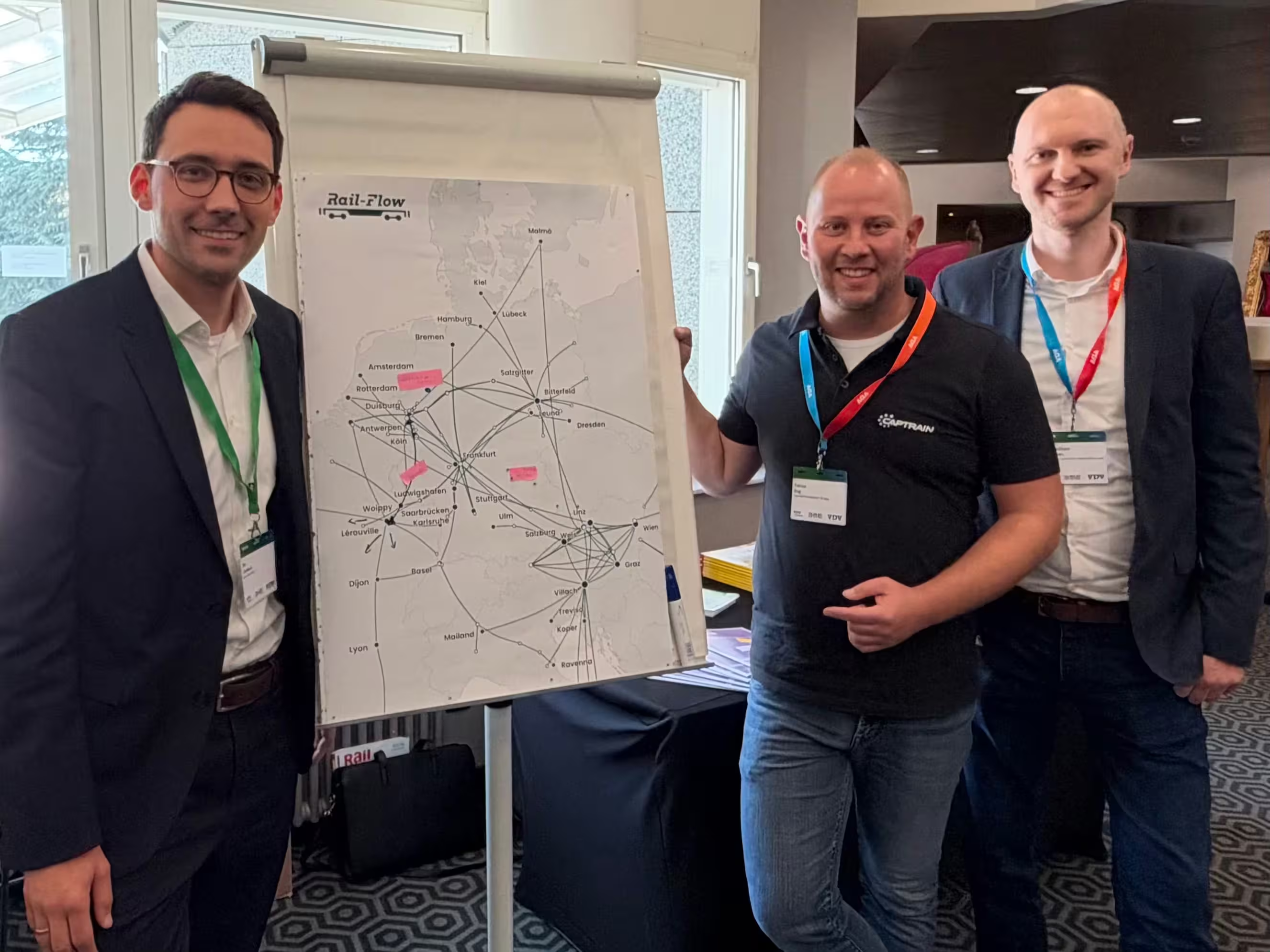
Frankfurt am Main, 7 October 2026. Single wagonload in Europe is facing major challenges. At the same time, the demand for flexible and cost-effective transport solutions for small consignment sizes by rail is growing. With the Rail Capacity Broker (RCB), the Fraunhofer Institute for Material Flow and Logistics IML, Rail-Flow GmbH and Captrain Deutschland have developed a new, neutral platform that brings providers and customers together. On 6 and 7 October 2026, the partners presented the platform for the first time at the 5th BME/VDV-Gleisanschluss-Konferenz in Wiesbaden.
Key Takeaways
- Jointly developed by Fraunhofer IML, Rail-Flow and Captrain Deutschland
- The platform pools spare capacity on existing services in a virtual network and uses it to determine the best route
- An algorithm combines the train networks of different providers for individual freight wagons or wagon groups
- Pricing details and transport contracts continue to be agreed directly between the partners
A better overview of available capacity
Most providers in rail freight do not have a comprehensive network. Customers lack an overview of available capacity and of the options for combining different providers. To counter this, the Rail Capacity Broker connects customers and providers on a neutral platform. It pools spare capacity on existing services in a virtual network and uses it to determine the best route. This gives shippers transparent and fast access to suitable transport options.
How the Rail Capacity Broker works
Providers enter their routes, including intermediate stops, spare capacity and capabilities. Customers can request a specific connection in the Rail Capacity Broker. An algorithm combines the train networks of different providers and calculates transport options for individual freight wagons or wagon groups.
Personal interaction is retained and continues to play an important role: the Rail Capacity Broker creates more transparency and acts as an intermediary that brings market participants together. Pricing details and transport contracts continue to be agreed directly between the partners. Contact details and a chat function make communication even easier.
More efficient than traditional single wagonload
In traditional single wagonload, freight wagons are assembled into a train at a regional collection point, which then runs to the marshalling yard, where the wagons are sorted by destination region and possibly regrouped several times. This system causes high infrastructure costs, long transport times and detours.
With the Rail Capacity Broker, existing capacity is utilised better, shunting work is minimised and new transport routes are identified. As a result, the platform not only improves access to offers for small consignment sizes, but also helps customers transport them more efficiently, faster, more reliably and more cost-effectively.
Funded by the federal programme Zukunft Schienengüterverkehr
The Rail Capacity Broker project is funded by the German Federal Ministry of Transport (BMV) as part of the federal programme Zukunft Schienengüterverkehr (Z-SGV) and will run until June 2027.
Learn more about this Project