Step 1

Offer & Routing
Calculate intermodal routes across rail, truck, barge, and short-sea. Compare cost, transit time, and CO₂ side by side. Create competitive customer offers in minutes.

Rail-Flow for Intermodal forwarders
Quote, dispatch, track, and invoice every intermodal shipment from one platform, built for intermodal. Standard integrations to your rail, short-sea, and barge operators — no more copy-and-paste, no more portal-scraping for status.






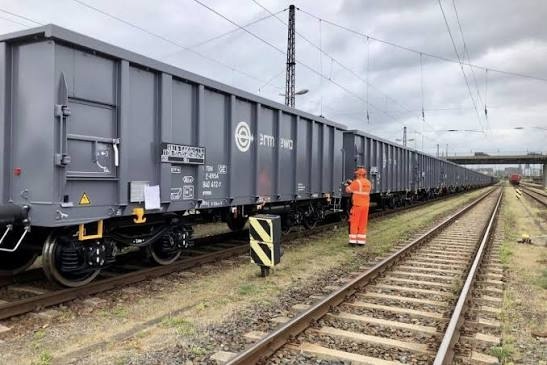
“This time we reached the whole market, not just the carriers we already knew. And the Rail-Flow team knows rail. We felt well looked after from the first request through to the award.”


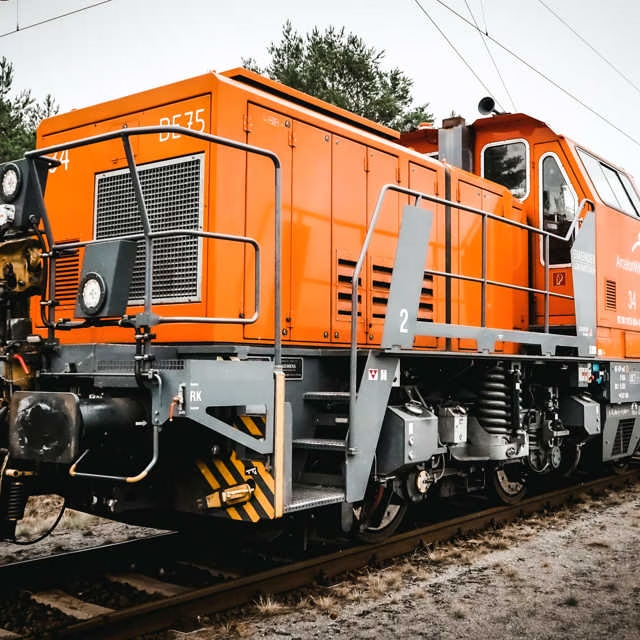
"With the PTM platform, we can translate the complex transport concepts of our customers into transport requests and send them — completely or in sections — to all suitable railway undertakings. It makes our work much easier and improves the response time to our customers."
.avif)

“Rugby taught me a lot about performing under pressure — trusting the people around you, communicating constantly, and sometimes just putting yourself on the line for the team. That mentality shows up directly in moments like a new feature release — you rally, everyone knows their role, and you push through together.”


„ROM comes with what we actually need to build offers in rail freight, and we enjoy working with it."

"Rail-Flow is becoming the operating layer for our rail logistics order-to-cash process. The real value for us is that it gives us a realistic path to standardize that process step by step – with end-to-end visibility instead of isolated tools."

"Our customers really appreciate that we now have a standardized offer which has a clear structure. The system also allows us to track sales potentials more easily and with more transparancy."


"We changed the way rail works. Doing that at scale needs a system built for rail and intermodal - and only Rail-Flow is it: one platform for sales, order-to-cash, and wagon management across the whole group."
The status quo
Every day, your dispatchers re-key bookings, scrape websites for status, and chase non-conformities by email. Here's what that costs — and how Rail-Flow changes it.

Booking 10,000 intermodal moves a year means re-keying every shipment into every operator's portal. Your dispatchers spend their day pasting data instead of solving problems. One missed update and a customer gets it before you do.

Rail, road, barge, short-sea — every mode lives in a different system. By the time you reconcile a multi-leg shipment, you've checked four portals, three emails, and two spreadsheets. Customers ask, "Where is it?" — you don't have one answer.

Your customer doesn't want a status report — they want certainty. When you can't proactively flag a delay, you spend the rest of the relationship apologising. Lose trust once, and the next tender goes to the competitor.

Routing decisions made on gut feel
Rail or truck? Barge or short-sea? Which operator on which leg? Decisions made by the dispatcher who's been there longest without a clear cost, transit-time, or CO₂ comparison.

Invoicing the manual way
Match supplier invoices to bookings line by line, reconcile costs against the contract, build customer invoices by hand. Working capital tied up while accounts catch up.
%201.svg)
A generic TMS that can’t really do rail
Road-first tools bolt rail on as an afterthought, with no true intermodal modelling, no rail order flowing to your operators, and no commercial close.
With Rail-Flow — the new standard

40% time savings on processing. Autonomous booking transmission, automated route calculation, and zero-touch invoicing. Your dispatchers stop pasting data and start handling deviations, the work that actually pays.

Real-time status across rail, truck, barge, and short-sea. Live track and trace from operator, terminal, and GPS data. Share the same view with your customers via your brand portal, without building anything.

Standard integrations to 25+ operators, ferry companies, terminals, and truckers. Add the Rail-Flow Marketplace to source missing slots from the wider rail network when your usual partners are full.

Decision support built in
Compare rail / road / barge / short-sea on cost, transit time, and CO₂, and choose the right mode for every shipment and leg.

Operational and commercial closing automated
Auto-match planned vs. executed costs per shipment. Real-time cost / revenue calculation. Send customer invoices straight after execution, protect your working capital.

Rail-native intermodal, end to end
Rail is a first-class mode here: multi-modal offer, booking to your operators, execution, and the commercial close (auto-match, invoicing) in one platform with clarity on every mode.
THE STATUS QUO
Problems
If you run intermodal forwarding, you'll recognise these three.


Booking thousands of intermodal moves a year means re-keying every shipment into every operator's portal. Your dispatchers spend their day pasting data instead of solving problems, and a missed update reaches the customer first.
Rail, road, barge, short-sea — every mode lives in a different system. By the time you reconcile a multi-leg shipment, you've checked four portals, three emails, and two spreadsheets. The customer asks, "Where is it?", and you don't have one answer. You start calling and emailing your partners, and by the time you have a clear picture, everything has already changed.
Your customer doesn't want a status report — they want certainty. When you can't proactively flag a delay, you spend the rest of the relationship apologising. Lose trust once, and the next tender goes to the competitor.
WHAT CHANGES WITH RAIL-FLOW
Three things every intermodal forwarder gets when they switch to Rail-Flow.

40% time savings on processing. Autonomous booking transmission, automated route calculation, and zero-touch invoicing. Your dispatchers stop pasting data and start handling deviations — the work that actually pays.

Real-time status across rail, truck, barge, and short-sea. Live track and trace from operator, terminal, and GPS data. Share the same view with your customers via your-brand portal — without building anything.

Standard integrations to 25+ operators, ferry companies, terminals, and truckers. Add the Rail-Flow Marketplace to source missing slots from the wider rail network when your usual partners are full.
HOW IT WORKS
Rail-Flow guides every intermodal shipment through five connected stages, soyour dispatchers, your customers, and your operators always see the samepicture, in real time, and the cost of every change is captured, not lost.
Offer & Routing
Calculate intermodal routes across rail, truck, barge, and short-sea. Compare cost, transit time, and CO₂ side by side. Create competitive customer offers in minutes.

Booking & Planning
Receive bookings via portal, interface, or email — AI reads and processes them. Intermodal legs are created and sent to your operators through standard integrations, no copy-and-paste.

Execution & Visibility
Live status from every intermodal operator and trucker, plus the driver app on the road legs. Pro-active deviation alerts. Customer-facing tracking portal in your own brand.

Deviation Handling & POD
Non-conformities surface in real time. Drivers capture proof of delivery in the app, and non-conformities from your rail, barge, and ferry operators are captured too. It all flows straight into the platform and the customer portal. Solve problems before customers notice them.

Auto-match supplier invoices to bookings, calculate cost / revenue / margin, and control deviations and extra costs before they eat into your margin. Invoice customers straight after execution, so you protect your working capital.
Products
Three products you can adopt individually or as a connected suite. Most forwarders start with Intermodal TMS, that's where the daily copy-and-paste pain lives, and expand from there. 40+ existing integrations with operators and service providers helps to fully automate your process to reach zero-touch order handling.
Intermodal TMS (ITMS)
Book, dispatch, and invoice intermodal in one platform.
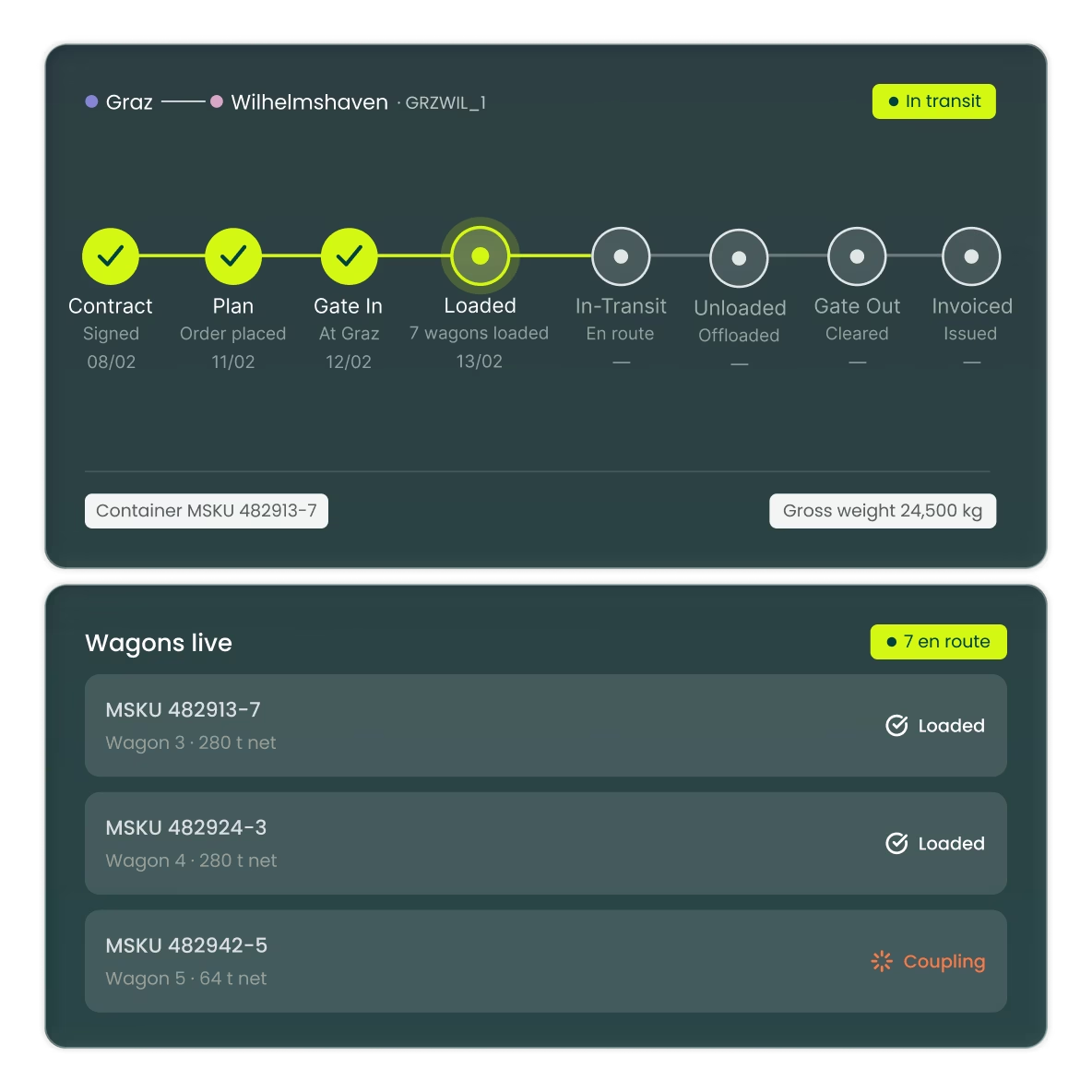
Intermodal TMS replaces the multi-tool stack with one platform: booking transmission to your rail, short-sea and barge operators, with real-time status, proactive deviation alerts, and automated invoicing.
Intermodal Offer Management
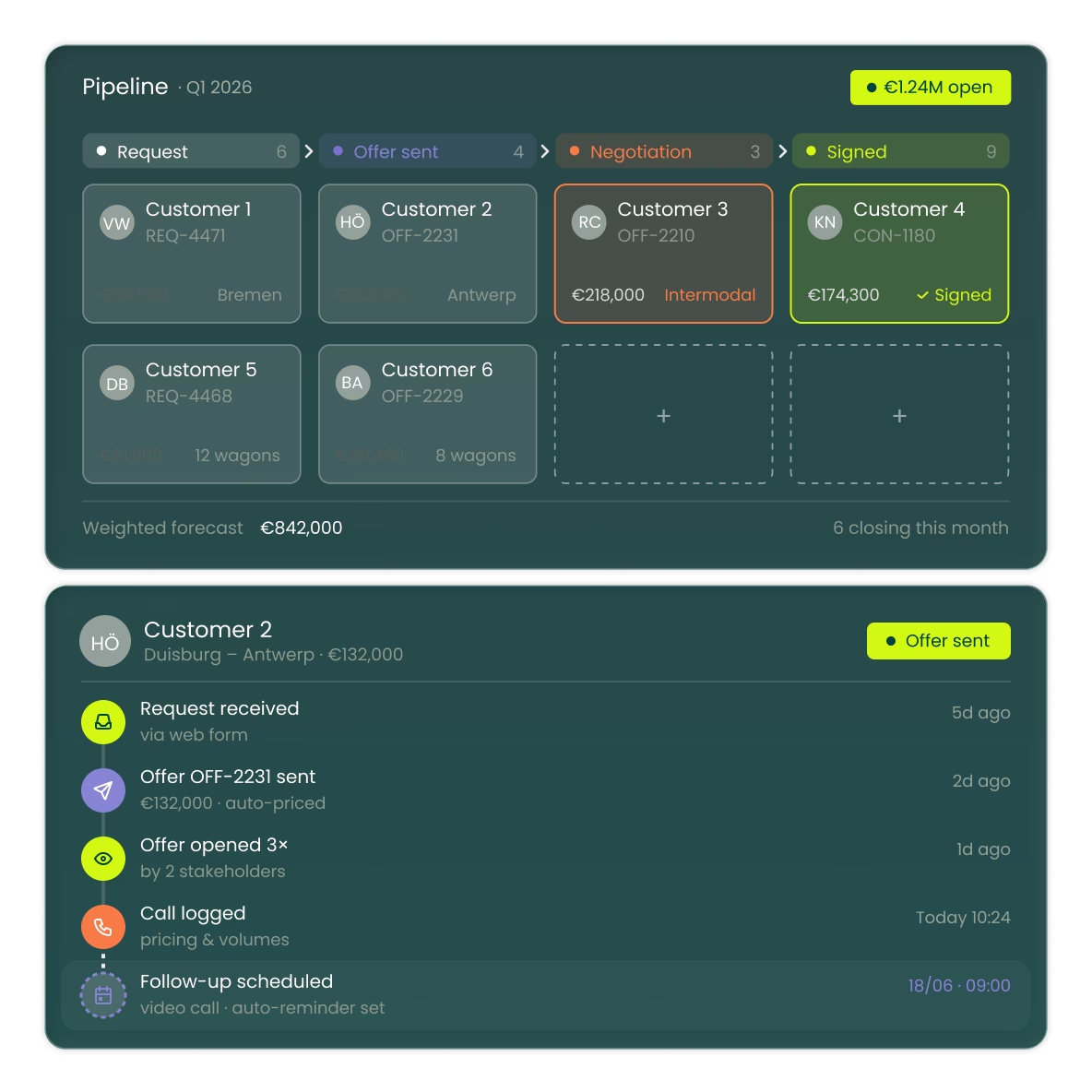
Build multi-modal quotes fast: calculate routes across rail, road, barge, and short-sea, pull from your rate libraries, and apply proper margin and tariff logic, the pricing depth generic and collaboration tools lack. Run digital tenders and spot pricing against a reliable partner network schedules and prices, compare options on cost, transit time, and CO₂, and send offers instantly.
DRIVER APP & POD
Driver and charter coordination and proof of delivery, built in.
A fully integrated driver app coordinates the road legs and captures digital proof of delivery on the last mile, while tracking and enforcing every SLA element agreed with the customer at collection and delivery. It all flows straight into the platform and your customer portal: no paper, no phone calls.
SECURITY & COMPLIANCE
Independent certifications, EU data residency, and full documentation of our security controls available on request.

Ready to see it in action?
Book a 30-minute demo with our intermodal team. We'll walk through your specific dispatch, planning, and invoicing workflow — no slides, no pitch.
Customer Stories
Real intermodal forwarding, real results.
Railway Operator
Captrain runs six legal entities across European rail freight markets. Before Rail-Flow: each entity managed sales separately, scattered information, inconsistent offer templates, through put times that stretched across weeks, and management with no view of the pipeline across the group. With Rail-Flow Offer Management and CRM: one sales architecture, six brands, one shared customer database underneath. Pipeline visibility from inquiry to award across every entity, and standardised offer documents that reflect the right brand, the right contract terms, every time.


Features for Intermodal forwarders
The features intermodal forwarders ask about most often: all included, all production-ready.

Featured for Intermodal forwarders
Booking and event information
Receive customer bookings via portal or interface, build the intermodal legs, and transmit them to your rail, short-sea, and barge operators through standard integrations. The single biggest difference between manual forwarding and a real intermodal platform.

Digital offering & spot pricing
Send one price request to your operators (regular lanes or one-off spot moves) and get their rates back in one place. Compare on price, transit time, service, and CO₂, and give the leg to the partner that fits the shipment best.

Driver app & digital POD
Coordinate the road legs and capture proof of delivery in one integrated driver app that also keeps every customer SLA in check at pickup and delivery. Everything lands in the platform and the customer portal.
Rail-Flow Marketplace
When the operator you usually use can't take the load, the Marketplace gives you direct access to 500+ rail freight providers across 27 countries. Post a request, compare offers, book, without spending the day on the phone. ICB for intermodal slots, PTM for rail traction.
The questions we hear most often during TMS evaluation. Anything missing? Just ask during the demo.
Have a question that's not covered here? Reach out and we'll get back to you within one business day.

Most intermodal forwarders go live in 6–10 weeks. LTG Cargo went live in 6 weeks thanks to standard operator integrations. Additional modules (Intermodal Offer Management, Driver App & POD) roll out in parallel based on your priorities.
40+ intermodal operators across rail, short-sea, and barge, plus truckers on the road legs. The list grows continuously; we can confirm your specific partners on a quick call.
Through a customer portal in your brand, not oursor via standard APIs, if. they'd rather connect their own system. Customerente bookings, see real-time status, and rceieautomatic notifications without you sending a single email.
Yes. Standard APIs and EDI integrations move data both ways with most forwarder TMS and ERP platforms. Rail-Flow runs standalone or as a connected module, use one or several alongside your existing stack.
Absolutely. Most forwarders start with Intermodal TMS where the operational pain is sharpest, then add Intermodal Offer Management and Driver App & POD once value is proven. PTM has a freemium tier you can try today, no commitment.
Blog
Read more customer success stories and updates from intermodal forwarders.

.avif)