
TERMINAL OPERATING SYSTEM
Run your inland terminal from gate to invoice on one system.
Built for small and mid-size intermodal terminals, container depots, and KV terminals. Proven at 1,000+ gate movements per day. Gate, yard, train, M&R, and invoicing on one cloud platform no deep-sea complexity, no 24-month rollout.
Trusted by intermodal terminals across Europe


THE PROBLEM
The gate runs on paper, the yard runs on Excel , while the train runs on phone calls.
At most KV terminals, inland hubs, and container depots, the operational reality is fragmented systems, manual handovers, and zero visibility between gate, yard, and train.

Deep-sea TOS overkill
Navis, Tideworks, and Inform are built for 1M+ TEU container hubs. The licence cost, the integration load, and the 24-month rollout don't fit a 60,000-container-per-year inland terminal.

Manual gate, paper M&R
Gate clerks type the same data into three systems. Damage photos live on a phone. M&R estimates fly back and forth by email for days while the box sits idle in the yard.

Rail-side disconnected
Train loading runs on a planner's spreadsheet. CIM waybills generated by hand. LSEOP and Binias confirmations chased over the phone. No link between the yard and the train at all.
THE RAIL-FLOW ANSWER
A TOS sized for inland intermodal logistics.
Built for small and mid-size inland intermodal, and connected to the rest of your operation, end to end.

Right-sized cloud TOS
Cloud-native SaaS designed for 20,000–100,000 containers per year. Modular — adopt gate, yard, train, M&R, or invoicing one at a time. Fast onboarding, predictable subscription, no €4M licence.

Digital terminal floor
Driver app and kiosk pre-check-in. Damage inspection with mandatory photos and touchscreen marking. Move jobs with paying party per move. M&R with shipping-line estimates and per-line-item approval.

Native Rail and EDI
Wagon checkout with handheld verification. CIM waybills auto-generated. LSEOP to Infrabel / Binias built in. Native EDIFACT — IFTMIN, CODECO, COREOR, and CEDEX for M&R with the major shipping lines.
HOW IT WORKS
Gate, yard, and train covered end-to-end.
The TOS handles every container, every move, and every wagon from the moment a truck pulls up to the gate to the moment the train clears the platform. Your teamhandles disputes and deviations; the system handles the rest.
Gate
Kiosk and web pre-check-in. Driver app or desk-assisted gate flow. 22+ configurable checkpoint questions with conditional branches per dossier type. Damage inspection with photo capture and schematic marking (x/y per face, MINOR / MODERATE / SEVERE). Dual OPA / SOPA reference validation. Bi-directional container blocking with reason codes. Gate-out PDF with photos and signature.
Yard
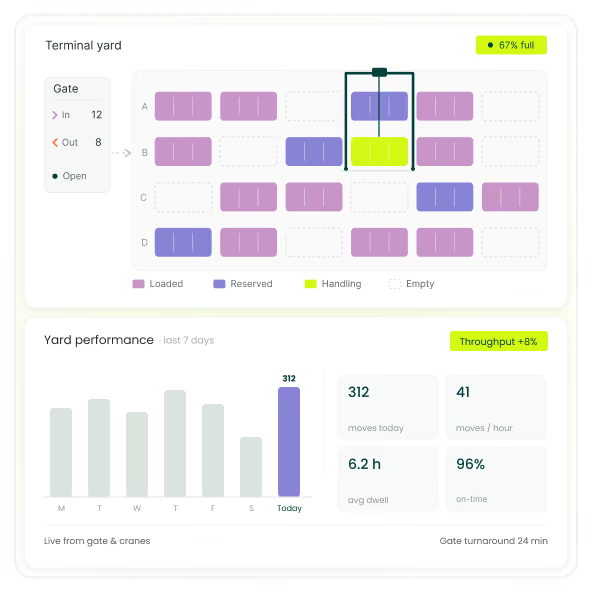
Every yard visit anchors to a single dossier — one unit, one paying party — so every move ties to a billing line. 4D positioning (section / row / column / height) and a 2D stock view replace table-only inventories. Commodity-based storage rules and customer-specific zones drive auto-fee calculation. Crane, reachstacker, and team assignment filter to each handheld automatically.
Train
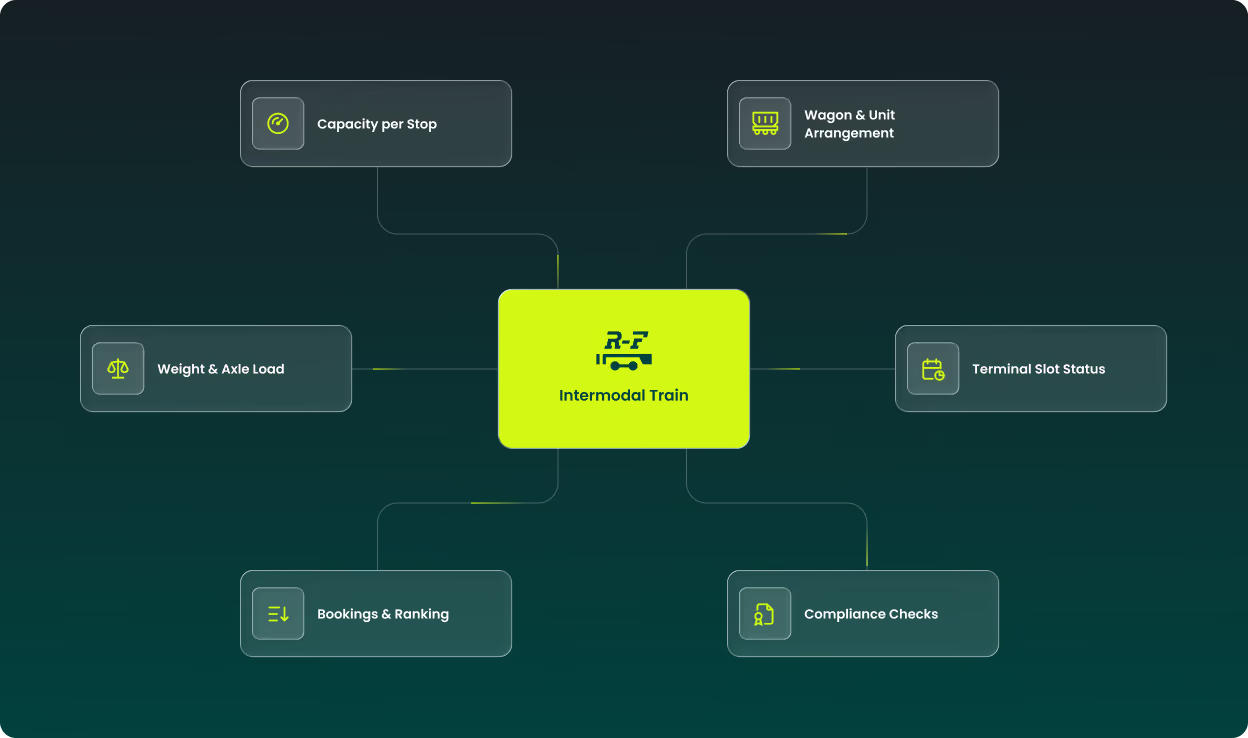
A wagon-by-wagon loading UI guides every position, with non-craneable unit checks and a loading proposal engine that accounts for type, weight, height, platform, and wagon. DG separation runs per RID. Ground checkers verify wagon checkout on handhelds, triggering LSEOP to Infrabel or Binias and the CIM e-waybill.
"Rail-Flow is becoming the operating layer for our rail logistics order-to-cash process. The real value for us is that it gives us a realistic path to standardize that process step by step – with end-to-end visibility instead of isolated tools."


TERMINAL OPERATING SYSTEM
Bring your hardest move. We will show how the TOS runs it.
See the TOS handle your actual gate, yard, and train flows in 30 minutes. Walk through your workflows with a terminal-operations specialist.
KEY FEATURES
Explore the core capabilities of the TOS
Main feature areas anchor everything the TOS does on a real terminal floor. Click through to see each in detail.
Every truck through the gate, every dossier closed.
Truck Check-In & Check-Out
At most terminals, the day is won or lost at the gate, when trucks stack up, the whole yard slows down. Truck Check-In & Check-Out replaces paperwork and radio calls with one guided workflow on a tablet.
With TOS, drivers arrive notified, with a booking reference and PIN. The crew confirms the unit and weight, photographs a walk-around, and the system assigns a slot. The weighbridge reading lands on the dossier automatically, and a signature completes it. Check-out reverses the same steps, with every move leaving a signed, photographed record.
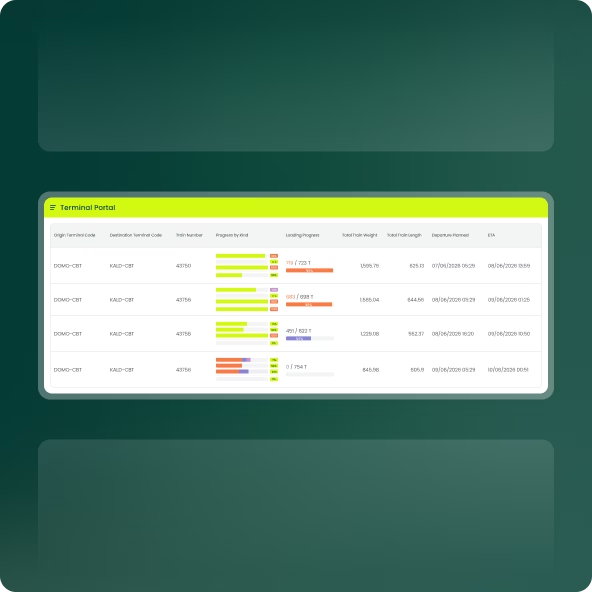
From truck to wagon, every move has a paying party.
Yard Placement & Move Jobs
The yard is where a terminal earns or loses its productivity, and running it on memory and radio invites rehandling. Yard Placement & Move Jobs puts it on one board instead. As units arrive, TOS assigns each a slot by rule, keeping like with like and fast-movers within reach. Every reposition, load, and unload then becomes a job sent straight to the right operator, while planners watch the whole yard fill up and empty in real time.
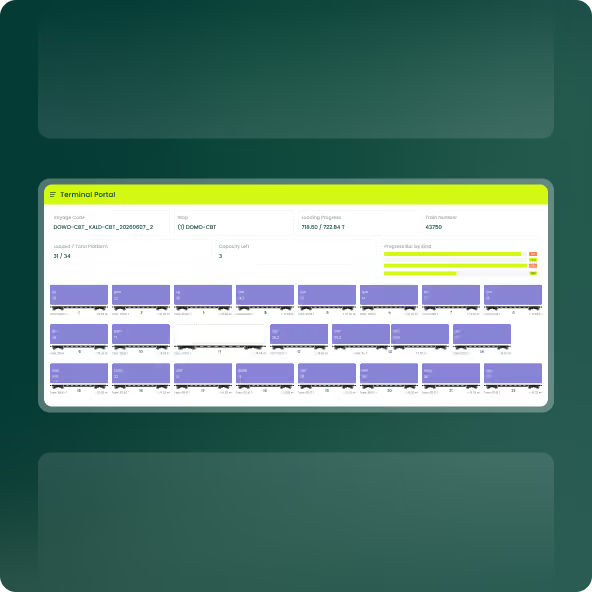
Estimates approved in hours. Reefers monitored every shift.
Train Load Planning & Wagon Check
This is where a rail terminal proves it's more than a container yard. Before a train arrives, TOS already knows its make-up from EDI and proposes the best-fit wagon for each unit, while every load is checked for weight, dangerous goods, and gauge so nothing unsafe reaches the track. On departure, each wagon is inspected and signed out, and the final composition travels on with the train, planning a pure container system simply can't do.
.avif)


Customer Stories
How terminals run their floor with Rail-Flow.
Real results from terminals using Rail-Flow TOS to digitise gate, yard, train, M&R, and invoicing.
Railway Operator
Running Offer Management & Transport execution for European Vision Rail
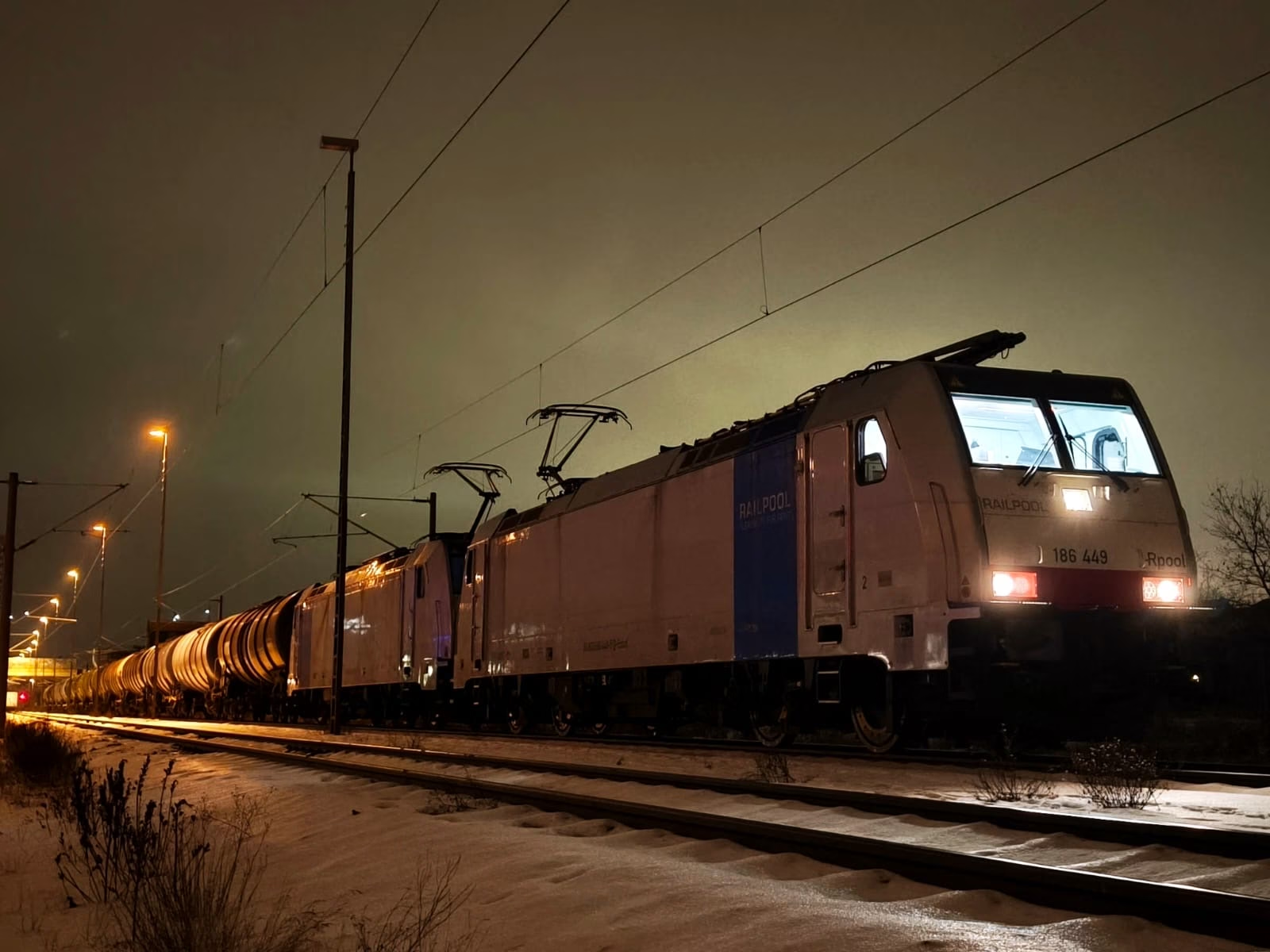
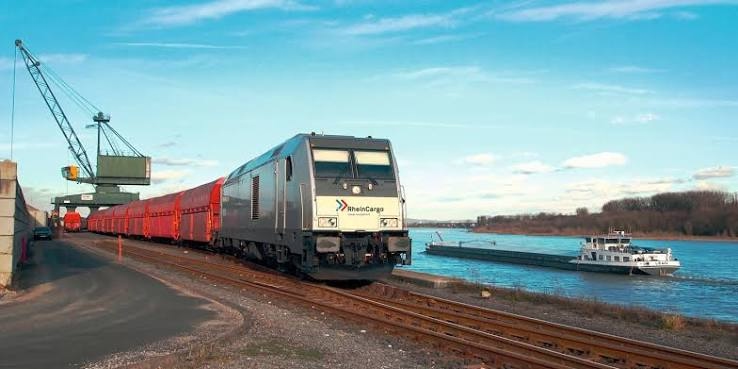
Captrain runs six legal entities across European rail freight markets. Before Rail-Flow: each entity managed sales separately, scattered information, inconsistent offer templates, through put times that stretched across weeks, and management with no view of the pipeline across the group. With Rail-Flow Offer Management and CRM: one sales architecture, six brands, one shared customer database underneath. Pipeline visibility from inquiry to award across every entity, and standardised offer documents that reflect the right brand, the right contract terms, every time.












MORE FEATURES
Every part of the transport life-cycle, in one platform.
Customs, reefer, invoicing, EDI, driver flows, and role-based reporting - the secondary workflows every terminal operations team deals with every day.

Customs & DG
Customs flags sit at both the unit and booking level, required documents block release until they're complete, and RID checks run automatically for rail dangerous goods.

Reefer Monitoring
Plug-in and plug-out events register with timestamps as they happen, ground checkers walk sequential zone rounds each shift, and the customer gets the temperaturereport on the schedule they expect.

Invoicing & Rates
Storage fees calculate against free days and tiered rates, self-billing runs in each customer's preferred format including PEPPOL, OPA / SOPA decouples operational from billing client, and invoice templates configure in the UI.

EDI & Integrations
Native EDIFACT covers IFTMIN, CODECO, COREOR, COPARN, and IFTMCS, with CEDEX for M&R, and APICS for Antwerp and Port Base for Rotterdam are alreadyintegrated.

Driver App & FastGate
Driver app for own and external charters. FastGate portal: live terminal occupancy, timeslot reservation, and train tracking for external carriers — self-service.

Roles, Audit & Reporting
Role-based access covers gate, planner, M&R, finance, and ground checker, every unit and move carries a full audit trail, and KPI dashboards report gate throughput, dwell time, and M&R cycle.
DISCOVER OUR TERMINAL OPERATING SYSTEM
Book a TOS demo that is tailored to your terminal.
Personalised 30-minute demo with one of our TOS experts. See how TOS handle 1,000+ moves per day on your data. See the M&R and invoicing logic on real data. Get a tailored quote in the same call.
.avif)
Michael Bott
Head of Sales
+49 69 96 75 97 68
m.bott@rail-flow.com
Frequently asked questions
Common questions about the TOS. Anything missing? Just ask during the demo.
Have a question that's not covered here? Reach out and we'll get back to you within one business day.
Rail-Flow TOS is a full terminal operating system scoped for inland and KV terminals, not a yard add-on bolted onto something else. Gate, yard, train, M&R, reefer, customs, and invoicing run on one cloud-native platform, with the rail side handled natively: CIM e-waybill, LSEOP and Binias, RID separation, and wagon checkout all built into the core. It is a great fit for a 20,000 – 100,000 container per year inland terminal at a fraction of the cost of deep-sea systems.
A Phase 1 MVP covering gate, yard, train, and M&R is typically live in 2 to 8 weeks on a single terminal. A full multi-terminal rollout with EDI configuration, custom OPA / SOPA invoicing, and CEDEX M&R integration takes months rather than years, with the EDI scope being the main variable. Most customers start with gate and M&R, then add the rest.
Rail-Flow TOS fits inland intermodal terminals, KV terminals, container depots, multi-cargo terminals with rail handling, and chemical-park rail terminals — all sized between 20,000 and 300,000 containers per year. Below that volume the TOS will likely be over-spec, and above it deep-sea systems like Navis or Tideworks are the right tool, not Rail-Flow.
Rail-Flow TOS is purpose-built for a different segment than any of these. Navis N4 and Octopi serve deep-sea container terminals at the 1M+ TEU scale, and Berghof BLU 2.0 is the legacy on-prem KV standard in Germany. Rail-Flow TOS is cloud-native and modular, built for small-to-mid inland intermodal, with rail and EDI native to the platform rather than bolted on.
Yes — CEDEX EDI runs live with Maersk, MSC, CMA CGM, and Hapag-Lloyd, and LSEOP to Infrabel and Binias to DB Netz are built in. CIM e-waybills generate with carrier confirmation tracked back into the platform. EDIFACT messages flow both ways for IFTMIN, CODECO, COREOR, COPARN, and IFTMCS, with port integrations live at Antwerp via APICS and at Rotterdam via Port Base.
MORE PRODUCTS
Explore the rest of the platform.
The TOS is one piece of an order-to-cash platform built for rail and intermodal. These modules connect into it seamlessly.
_converted%5B1%5D.avif)
Transport Management (TMS)
Plan, dispatch, track, and invoice every transport your fleet runs. Orders, trains, and wagons connected on one platform — no double entry, no reconciliation lag.
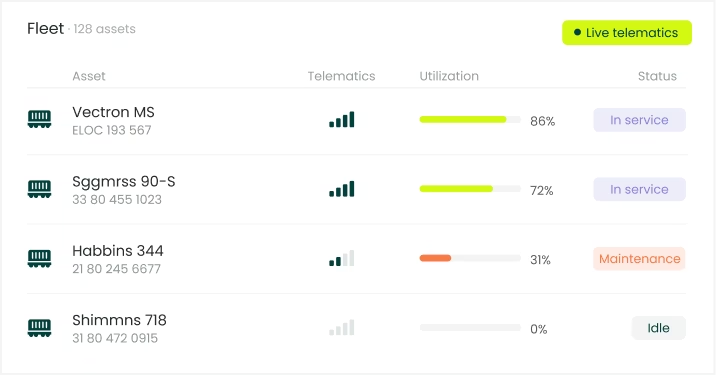
Fleet Management
Manage wagons, locos, and rolling stock with full life-cycle visibility and telematics integrations. Connects with the TOS for inbound and outbound wagon movements.
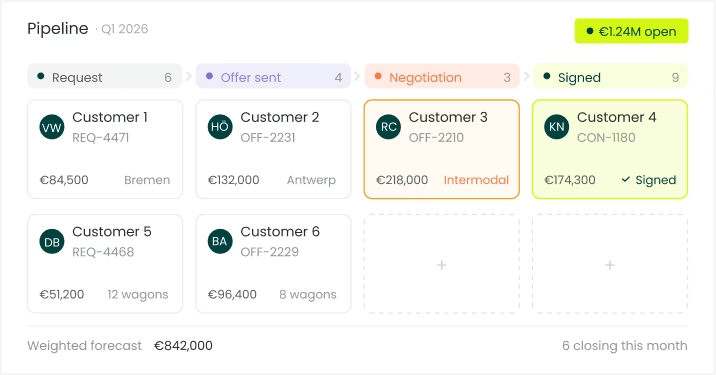
Offer Management and CRM
Manage customer relationships, build structured offers, and track every deal - from first request to signed contract.