Purchase & Tender Management
One request. The whole market.
Dow Europe ran its entire European rail tender on Rail-Flow's Purchase & Tender Management. More than 170 lanes, single wagon load and block train, request through award in one channel. The result: significantly lower logistics costs, new potential providers and far less manual work.
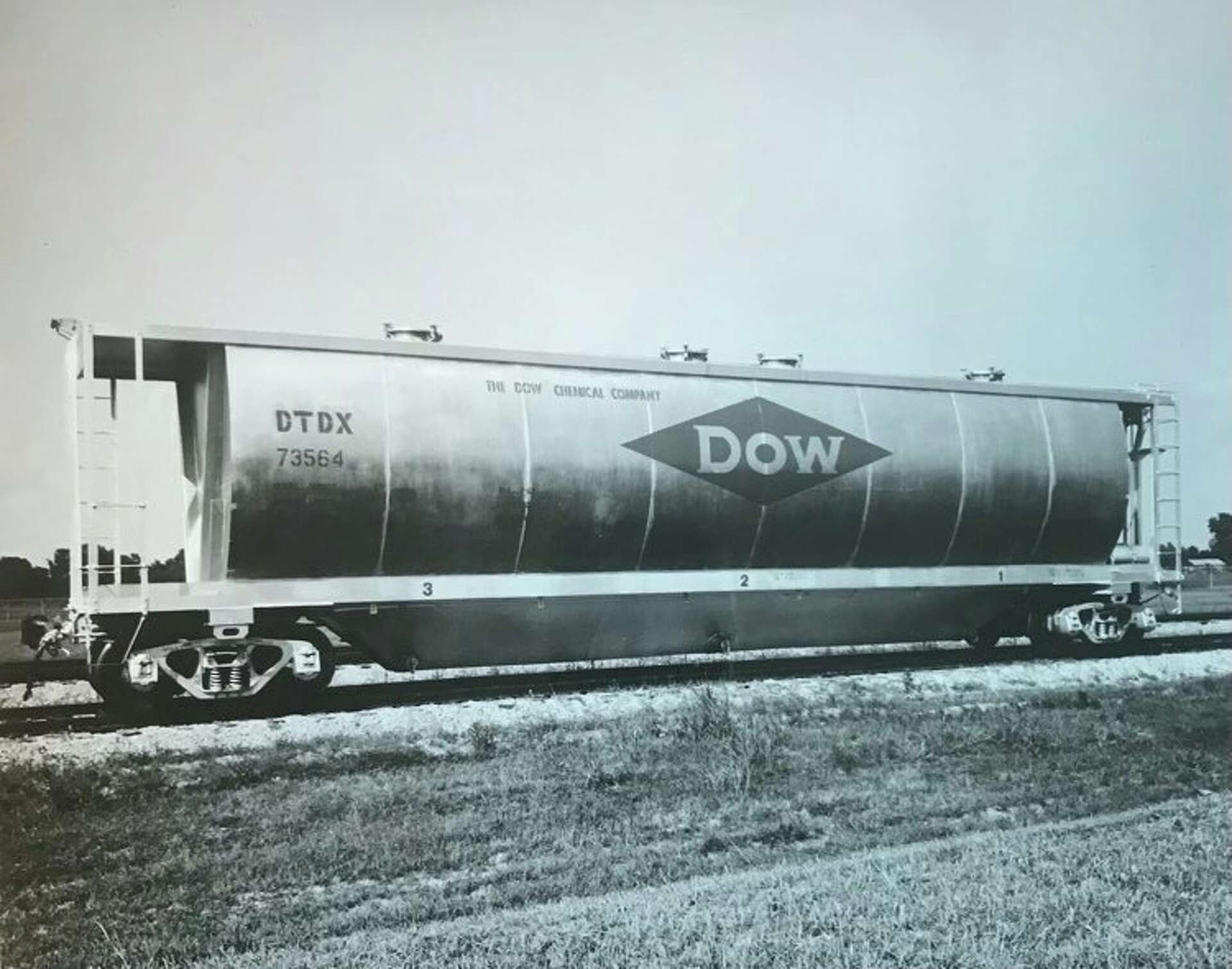
Dow Europe moves chemicals across Europe by rail. Until 2026, its rail RFQ’s ran on email and spreadsheets. Requests went to the carriers the team already knew. Offers came back in different formats, in different inboxes, at different times. Every comparison had to be rebuilt by hand.
In 2026, Dow's European rail procurement team ran its tender on Rail-Flow's Purchase & Tender Management (PTM). Two requests went out: one for single wagon load, one for block train. Together they covered more than 170 lanes from Dow's European productions sites (mainly located in Germany and Benelux) into eleven countries.
This time the request did not go to a shortlist. It went to the market: 160 rail providers received the request, more than Dow had ever reached in a tender.
Three things followed. With 28 concrete offers on the table, (1) Dow got the opportunity to know the rail transport suppliers in the market and new relationships, (2) Dow had a genuinely competitive field with very economic offers and lower logistics costs. And (3) the tender itself took less work, because request, offers, negotiation round and award all ran in one place.
Highlights of this success:
- Lower logistics costs: a competitive field instead of a shortlist
- Less effort: no rebuilding offers into a comparison sheet, no chasing attachments, no version confusion
- The whole market in one request: no contact list required
- 28 concrete offers to choose from, several of them veryeconomic, all comparable in one view
- Request, offers, negotiation round and award: the full tender cycle on the platform
- Next year's tender is planned to run on Rail-Flow again
“This time we reached the whole market, not just the carriers we already knew. And the Rail-Flow team knows rail - we felt well looked after from the first request through to the award.”

Challenge
Email and Excel. Requests reached the carriers the team already knew. Going wider meant contacts Dow simply did not have. Every offer in its own format. Comparing them meant rebuilding the numbers by hand. Questions in separate mail threads. Two colleagues, two versions of the same bid.

Solution
One request reaches the whole provider market on the platform. No contact list needed. 300+ railway undertakings and forwarders are already listed, including companies Dow had never spoken to. Structured bid sheets. Every offer arrives comparable, so there is nothing to rebuild. Request, offers, negotiation and award in one channel. One status for the whole team.
The tender process on PTM
One process, four steps, all on the platform.
1. Request creation. Dow supplied the lane data and the operational/commercial requirements. Rail-Flow loaded the lanes into the platform, transformed thedata and ran a joint validation session before anything went out.
2. Offer creation. Providers signed the NDA on the platform and bid into a structured bid sheet, directly on the platform or via Excel upload. The same fields for everyone, so every offer arrived comparable.
3. Feedback and negotiation round. Dow gave the providers feedback on their first bids and opened anegotiation round. Providers revised their prices and updated if needed in thesame bid sheet.
4. Awarding. Dow compared all final offers side by side - price, transit time, train parameters - and awarded on the platform.
Guided by people who know rail
Dow's tender was substantial: more than 170 lanes, two tender types, eleven destination countries, two rounds. Rail-Flow's Customer Success team treated it as a joint project, not a handover.
They built the tender together with Dow. Weekly check-ins during the project. Bid sheet templates were prepared in German and English. The provider side was briefed before the request went live and supported whenever a question came up.
Dow valued the rail expertise behind it.
Results
Dow reached more rail providers with this tender than ever before. Already known and new providers came back, several of them companies Dow's rail procurement team had never been in contact with.
That is where the saving comes from. A wider field means real competition on price and transit time, across the whole lane portfolio. Dow used the negotiation round to improve on the first-round prices in the same bid sheet and optimised its European rail logistics costs significantly.
The second gain is workload. A tender of this size used to mean weeks of manual handling: chasing attachments, converting formats, rebuilding a comparison sheet, answering the same question in separate mail threads. On the platform, offers arrive in one structure, so there is no comparison sheet to build. The negotiation round runs in the same bid sheet, so nothing is re-sent. The whole tender team sees one status, so nobody works from an outdated version. And the final comparison exports straight into Dow's internal approval process.
Lower cost and less work at the same time. That combination is why Dow plans to run the next rail tender on Rail-Flow again.
"A shipper should not have to know every operator in Europe to get a fair price. The market should come to the request.”
Dominik Fürste, Co-Founder, Rail-Flow